
Ms. Korpas' Biology Test by Samiyah Evans
Biology students demonstrated a strong understanding of energy transfer in living organisms during Ms. Korpas’ cellular respiration and photosynthesis test last Friday in her classroom. The exam served as the capstone to one of the semester’s most challenging units, requiring students to apply complex scientific concepts to real-world examples. Many students analyzed how energy moved through cells, compared chemical processes in plants and animals, and evaluated steps that supported ATP production. The test drew on several weeks of lessons, lab work, and discussions, providing students with a foundation for deeper scientific thinking.
The unit’s intensity encouraged students to study consistently in preparation for the assessment. Freshman Tiana Biggs said the material challenged her to stay organized and focused throughout the week. “I studied every day for a week because the steps in both processes were easy to mix up,” Tiana Biggs said. She added, “Breaking each system into smaller parts helped me see how energy flowed and why each reaction mattered, and reviewing my lab experiments made it easier to remember the details.” Julian Baxter, another freshman, said he also worked hard to understand the material. “I kept a chart of all the steps, and that really helped me track the processes during the test,” Baxter said. Both students’ preparation reflected the broader strategies many classmates used to master the unit’s complex content.
During the test, students relied on diagrams, lab data, and prior experiments to support their answers, showing not only accuracy but also the ability to connect classroom concepts to larger biological systems. Their work reflected growth in critical thinking and problem-solving, particularly as they explained how living organisms converted and used energy. By the end of the week, students reported feeling a sense of relief and accomplishment after completing one of the semester’s most rigorous assessments. The experience prepared them for future lessons on ecosystems and metabolism and strengthened their confidence for upcoming scientific challenges.
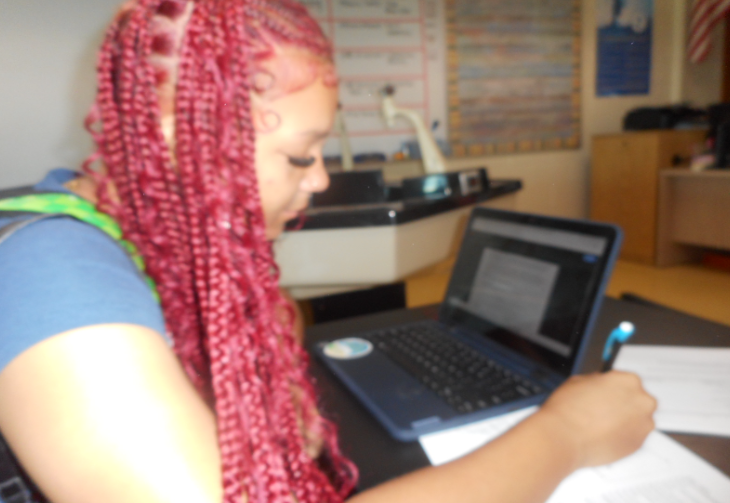
Caption: Biology Students Mastered Energy Concepts. Students demonstrate their understanding of energy transfer during Ms. Korpus’s cellular respiration and photosynthesis test last Friday in biology class. Tiana Biggs studied diagrams, notes, and past lab experiments to track how energy moves through cells and why each reaction matters, while Julian Baxter reviewed his lab charts to follow the steps of photosynthesis and cellular respiration. “Breaking each system into smaller parts really helped me see how energy flowed,” Tiana Biggs said. “I kept a chart of all the steps, and that really helped me track the processes during the test,” Julian Baxter added. Photo Credits to Miyah Evans